

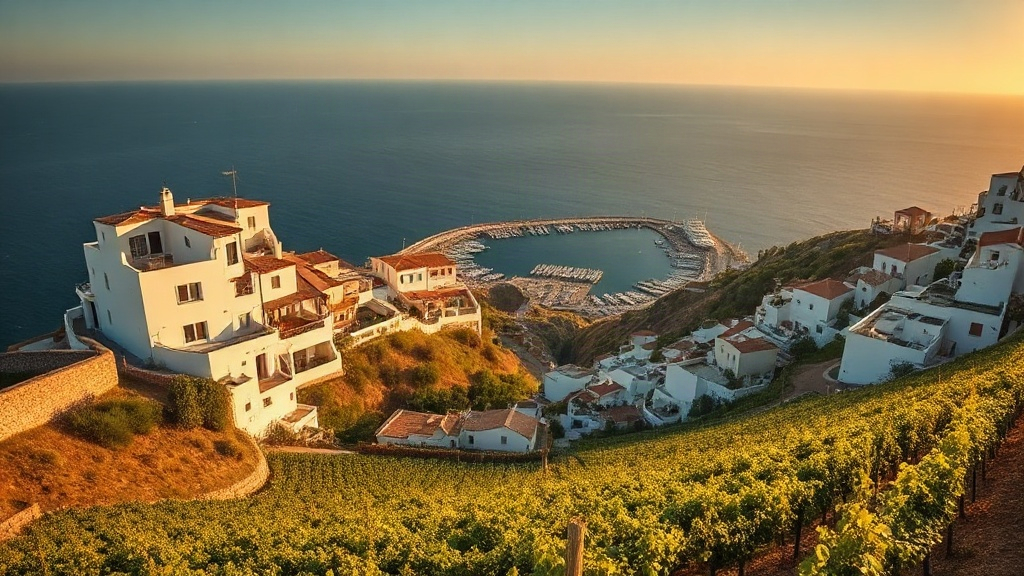
Tucked away in the westernmost corner of the Costa del Sol, Manilva remains one of those rare coastal towns that hasn’t lost its soul to overdevelopment. While nearby Marbella and Estepona command most of the attention, Manilva quietly offers something increasingly scarce along this coastline: authenticity paired with genuine value.
For buyers considering homes for sale in Manilva, the appeal goes beyond competitive pricing. This is a municipality where Spanish culture still thrives, where vineyard-covered hills meet Mediterranean beaches, and where your daily routine might include morning swims at quiet coves followed by tapas at family-run chiringuitos.
What Makes Manilva Different
Manilva spans from inland countryside down to 8 kilometres of coastline, creating distinct micro-markets within a single municipality. The old town sits inland, whitewashed and traditional, built around the 16th-century Santa Ana Church. Here, life revolves around the weekly Friday market and local bodegas producing the area’s surprisingly good wine.
Down at sea level, three coastal zones tell different stories. Castillo de la Duquesa centres around a 18th-century watchtower and marina, attracting buyers who want waterfront dining and boat access. Puerto de la Duquesa offers the most developed stretch, with international restaurants and established residential communities. Sabinillas, the largest coastal area, maintains a more Spanish character with its fishing heritage still visible.
This variety means buyers aren’t locked into one lifestyle. You can find hillside villas with vineyard views, marina-front apartments, or townhouses within walking distance of the beach—all within the same municipality and often at prices that would barely buy a studio elsewhere on the Costa del Sol’s luxury market.
The Daily Reality of Living Here
Manilva hasn’t been designed for tourists, which shapes daily life considerably. The infrastructure serves residents first. Supermarkets stock what locals actually eat, not just what holiday makers expect. The health centre provides comprehensive care. Schools operate in Spanish, though the international school in nearby Sotogrande is a 15-minute drive.
The climate delivers roughly 320 days of sunshine annually, with mild winters that rarely require heating beyond a few weeks. Summer temperatures hover around 28–30°C, moderated by sea breezes that make coastal properties particularly comfortable. This weather enables year-round outdoor living—a factor that significantly enhances quality of life and property usability.
For practical amenities, you’re looking at a 10-minute drive to Estepona’s larger shopping centres and medical facilities, or 15 minutes to Sotogrande’s premium golf courses and international school. Gibraltar sits 20 minutes west, useful for English-language services, international flights, and that peculiar experience of British culture transplanted to Mediterranean limestone.
Property Types and Pricing Reality
The homes for sale in Manilva range from €150,000 apartments to multi-million-euro villas, though most activity happens in the €200,000–€500,000 bracket. Two-bedroom apartments near the coast typically start around €180,000–€250,000, with penthouses and frontline positions commanding €300,000–€450,000. Three-bedroom townhouses in established communities run €250,000–€400,000, while detached villas with sea views span €400,000–€800,000, depending on size and location.
New developments are gradually changing the landscape. Several projects launched in the past two years target the same buyers considering Estepona or Marbella but seeking better value. These typically offer modern specifications—underfloor heating, home automation, quality finishes—at prices 20–30% below comparable properties in neighbouring municipalities.
Older properties, particularly those built in the 1990s and early 2000s, present renovation opportunities. Many of these complexes occupy prime coastal positions but show their age in dated interiors and communal areas. Buyers with renovation budgets can secure exceptional locations at significant discounts.
Investment Considerations
Manilva’s rental market operates differently than Marbella’s. Holiday lettings generate income primarily from April through October, with August commanding premium rates. Two-bedroom coastal apartments typically achieve €800–€1,200 weekly during peak season, dropping to €400–€600 in shoulder months. Annual rental yields for holiday lets generally range from 4–6%, though this requires active management or agency involvement.
Long-term rentals have strengthened as more professionals work remotely from the coast. A two-bedroom apartment might rent for €800–€1,100 monthly on annual contracts, providing more stable income with less management intensity. Demand comes from a mix of working professionals, retirees, and families connected to Sotogrande’s international community.
Capital appreciation has tracked steadily upward since 2016, though without the dramatic spikes seen in Marbella or Benahavís. Properties have appreciated 25–35% over the past five years, with coastal locations and new developments performing strongest. This slower, steadier growth suggests less speculation and more fundamental demand driving the market.
The municipality’s development plan limits future construction to specific zones, protecting the area from the oversupply issues affecting some coastal municipalities. This controlled growth should support property values long-term, though it also means less choice in the new-build market compared to more developed areas.
The Cultural and Social Landscape
Manilva’s cultural calendar revolves around traditional festivals that reveal the town’s agricultural roots. The September grape harvest festival celebrates local wine production with street parties, tastings, and grape-treading competitions. August’s night of wine and flamenco draws crowds to the old town. These aren’t tourist spectacles—they’re genuine community celebrations that international residents find themselves drawn into.
The expat community here tends toward permanent residents rather than seasonal visitors. You’ll find British, German, Scandinavian, and increasingly Northern European buyers who’ve chosen Manilva deliberately, often after exploring more expensive areas and deciding they’d rather have a larger property and lower costs than a prestigious postal code.
This creates a different social dynamic than pure holiday areas. Residents actually know their neighbours. Community initiatives function. There’s a palpable sense that people care about maintaining what makes Manilva appealing rather than transforming it into something else.
Making the Decision
Homes for sale in Manilva suit specific buyer profiles particularly well. If you want coastal living without paying Marbella premiums, it delivers. If you’re seeking a genuine Spanish town that happens to have excellent beaches rather than a resort that happens to be in Spain, Manilva fits. If investment returns matter but you also want somewhere you’d actually enjoy spending time, the balance here makes sense.
The area suits permanent residents better than holiday home owners, simply because the infrastructure and amenities reward regular use. It’s less suited to buyers seeking vibrant nightlife, extensive shopping, or the social prestige that comes with certain addresses. Manilva doesn’t compete in those categories, nor does it try to.
What it does offer is increasingly rare along this coastline: a functional town with authentic character, solid infrastructure, attractive properties at sensible prices, and a quality of life that doesn’t require constant compromise. For many buyers, that combination outweighs any perceived drawbacks of being slightly off the beaten path.